On January 15, 1919, an enormous molasses tank ruptured in Boston, sending a deadly surge through the North End. The story sounds absurd. Its 21 deaths were tragically real.

It sounds like a joke until you see the photographs
On January 15, 1919, residents of Boston’s North End experienced one of the strangest industrial catastrophes in American history. An enormous storage tank burst, releasing approximately 2.3 million gallons of molasses into streets, buildings and the waterfront. The word ‘molasses’ may bring to mind gingerbread and kitchen cupboards, but this was an industrial supply held in quantities capable of crushing structures. Twenty-one people died and roughly 150 were injured. Contemporary photographs show a scene that resembles a demolished construction site more than a sticky spill. This was not folklore, and its grim toll should never be reduced to a punchline.
The giant tank beside the railroad
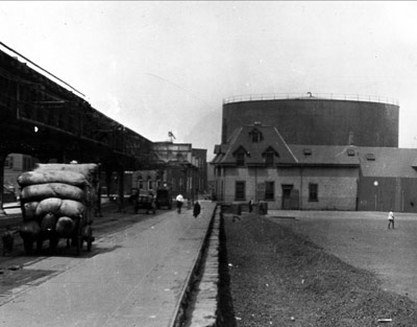
The Purity Distilling Company’s tank was roughly 50 feet tall and stood near Commercial Street and the elevated railway. Boston City Archives dates its construction to 1915, only a few years before the disaster. It received molasses transported into the harbor and stored it until the liquid could move onward in industrial processing. The tank was not hidden away in an isolated countryside facility. It stood in a working neighborhood with nearby businesses, homes, people on foot and railroad infrastructure. A failure at that location would have nowhere harmless to discharge; the contents could sweep directly into the surrounding streets.
A warm January day with no warning anyone could use
The afternoon was comparatively mild for a Boston winter. Workers and residents were moving about outdoors near the tank. Just before the disaster, witnesses described an unusual rumble and loud cracking sounds. Some initially wondered whether the elevated train was responsible for the noise. Then the metal structure gave way. The catastrophe unfolded too rapidly for nearby people to grasp what was happening and escape. Descriptions of the sound differ across later retellings, but official historical accounts agree on the scale of the rupture and the enormous volume released. The unimaginable became a physical emergency almost at once.
Why a wave of syrup was lethal
People associate molasses with slow movement because a spoonful pours reluctantly from a bottle. Millions of gallons released from a tall structure behave very differently. The stored liquid had considerable mass and elevation; when the tank failed, the sudden outflow struck whatever lay in its path. Historical accounts describe a wave perhaps 15 feet high in places and moving extremely quickly near the rupture. The liquid was dense, and the debris it carried became dangerous as well. Structures were damaged or displaced, vehicles and animals were caught, and people could be knocked down, trapped or unable to breathe.
The scene recorded in the archive photographs
The photographs are part of what makes this story so striking. A panoramic view from 1919 shows wreckage spread across the North End, broken timbers, twisted metal, vehicles and crowds of responders. Another image shows the tank before the disaster, its massive cylindrical shape rising behind low buildings. Seen side by side, the two images explain the event more vividly than any exaggerated internet illustration. The photographs are historical documents, not AI reconstructions. Their value is also a warning: spectacular images of destruction record an event that affected workers and families with names, homes and livelihoods.
Twenty-one lives, including two children
Boston’s own historical account identifies 21 people killed and 150 injured. Among the dead were laborers, drivers and others working near the wharf and public works yard. The list also includes two 10-year-olds, Pasquale Iantosca and Maria Distasio, who had been outside during the unusually mild day. Firefighter George Layhe was also among those killed. By giving the victims names, an otherwise surreal story returns to reality. These were not anonymous characters in a viral oddity. The disaster intersected ordinary errands, work shifts, homes and a firehouse that happened to sit near an enormous industrial tank.
What rescuers faced
Police, firefighters, Red Cross volunteers and cadets from the nearby USS Nantucket responded. The heavy liquid and wreckage created extraordinary obstacles for anyone trying to locate survivors or remove injured people. Footing was treacherous, debris blocked routes, and the material clung to everything it touched. Rescue and cleanup were difficult for different reasons. Emergency crews confronted immediate life-threatening conditions; workers afterward confronted blocks of damaged buildings and contaminated surfaces. Contemporary reports and later library collections describe how long the cleanup continued. The bizarre substance made a difficult disaster even harder to manage.
The problem had reportedly been visible before the rupture
Later accounts discuss concerns about the tank’s performance before it failed. Neighbors reportedly noticed leakage, noises and instability as it filled. Some recollections suggest that leaking molasses was a familiar sight rather than a warning treated with sufficient urgency. Those accounts should not be confused with a perfect, real-time technical diagnosis; the detailed causes were examined through investigation and litigation. Yet the broader lesson is clear: residents and workers may become accustomed to warning signs when a hazardous industrial structure remains in everyday view. Familiarity is not proof of safety.
Did the weather make the tank explode?
Popular versions sometimes assign the entire disaster to a sudden warm spell, fermentation inside the tank or one dramatic ‘explosion.’ Temperature changes and pressure are parts of the broader historical discussion, but no responsible short article should claim that a single fashionable theory fully explains a complicated structural failure. The tank’s construction, operation and condition came under intense scrutiny afterward. The important confirmed facts are the rupture, the enormous release and the loss of life. A curious reader should distinguish contemporary reports, later engineering interpretations and colorful retellings written long after the witnesses were gone.
Why the accident became a legal landmark
After the disaster, families and businesses sought accountability. The event generated major civil litigation involving the company connected with the tank. Historical accounts treat the legal aftermath as an important chapter in the development of industrial responsibility and oversight. In popular memory, the story is often reduced to a bizarre hazard; in legal and engineering history, it also raises questions about design review, construction quality, warning signs and what companies owe to neighbors. A deadly industrial failure is not made less serious because the substance involved seems ordinary or even ridiculous.
The cleanup and the legend of a sweet smell
Accounts describe molasses clinging to buildings, equipment, clothing and streets, while also finding its way toward the harbor. The effort to clean the area was extensive. Over time a persistent tale emerged that parts of the North End smelled of molasses on hot days for years afterward. That detail appears in historical recollections and modern articles, but it is not something a visitor can independently verify today. It is best understood as part of the neighborhood’s long memory. The enduring story reflects how one unusual disaster became woven into local identity, even as the visible destruction disappeared.
Can visitors still find the location?
The North End is a living Boston neighborhood, not a preserved disaster site. Visitors interested in the history should use contemporary maps and official local historical information to understand the former waterfront and Commercial Street setting. A modern sidewalk or building will not reproduce what the 1919 photographs show. The most instructive comparison is archival: the huge tank beside the railroad before the failure and the devastated landscape afterward. As with any location where people died, visiting with respect is better than staging a joke or presenting the tragedy as supernatural evidence.
Why it belongs in the Weird Shite archive
Weird history is at its most compelling when the evidence is better than a conspiracy theory. An enormous wave of molasses sweeping through a major American city sounds invented, yet civic archives, surviving photographs, library collections and period journalism document it. The strange premise draws readers in; the sources give the story weight. It also challenges an instinct to underestimate danger from familiar materials. No ghosts, aliens or secret experiment are needed to make the record disturbing. The truth—that a normal industrial product became a devastating wave—is extraordinary enough.
The two lessons readers can take away
First, ordinary substances become hazardous at extraordinary scales. Whether the material is water, grain, fuel or molasses, stored mass and failed containment can have consequences far beyond a property’s boundary. Second, unusual stories deserve careful verification. Boston City Archives offers a starting point, and the Boston Public Library maintains a photograph collection related to the disaster. The confirmed date, location and death toll do not depend on anonymous websites or repeated social-media captions. That is the foundation of Weird Shite’s best kind of story: unsettling facts, presented with the sources that let readers check them.
Primary sources and archive links
Research this documented event using Boston City Archives’ centennial account, Boston Public Library’s historic photograph collection, and the Wikimedia Commons public-domain photographs. Find more thoroughly sourced unusual history at Weird Shite.